
Grand Canyon Rapids Guide: Biggest Rapids (Including Lava Falls) + What to Expect
Running the rapids is one of the most exciting parts about rafting the Colorado River through the Grand Canyon. They’re loud, fast and splashy! The rapids can be intimidating, especially for people who have never run large volume rivers before.
This guide breaks down what the biggest rapids might feel like, why the rapids change and what to expect on the raft. You’ll also get some information on safety and a list of some of the most popular rapids.
Quick Take: what Grand Canyon rapids feel like and why they vary
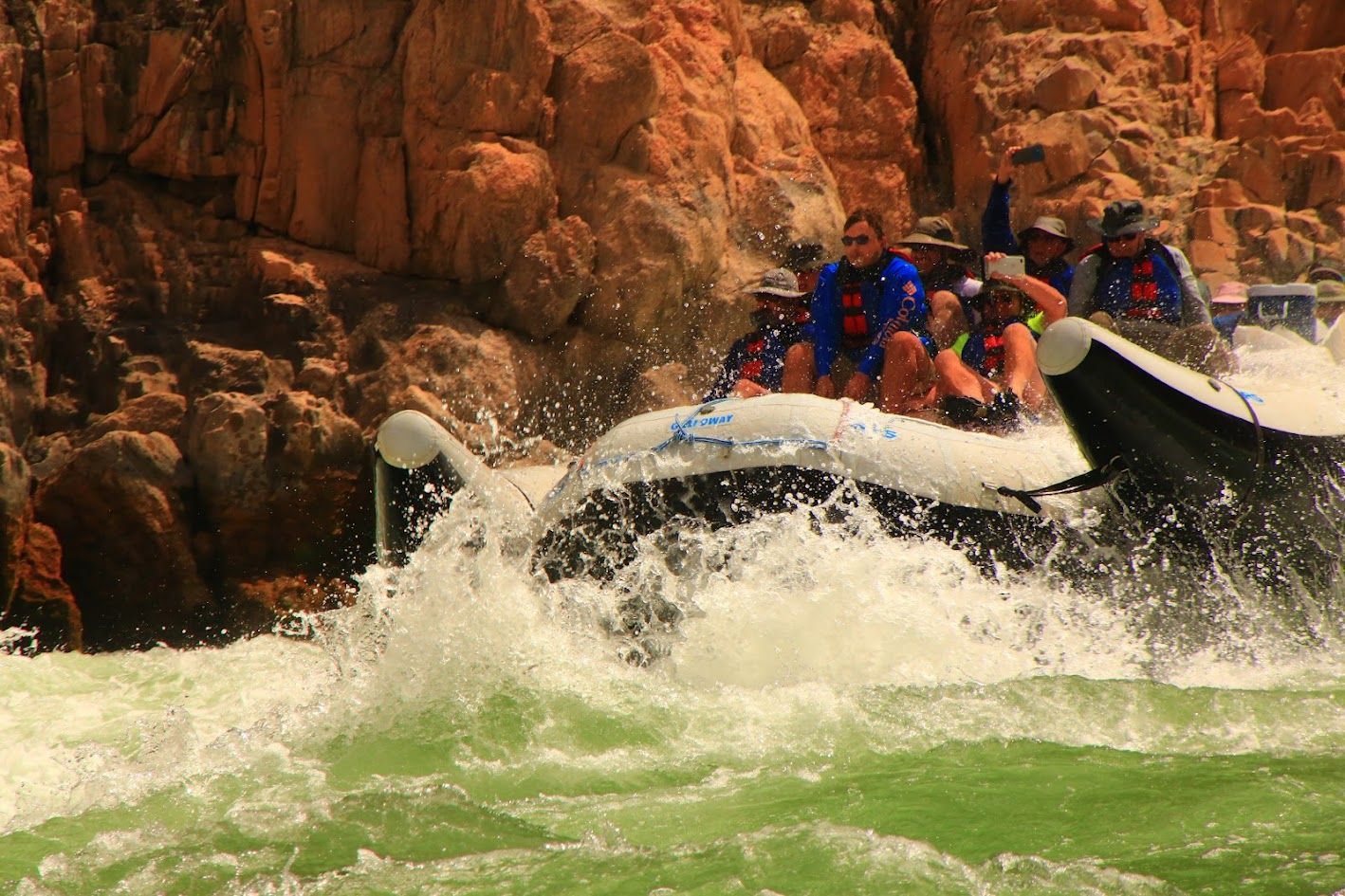
How a Grand Canyon rapid feels is based on a few factors: water flow or CFS (cubic feet per second), water speed, and the size of the rocks under the water that form the rapid. Some hits can feel like a roller coaster drop while others may feel like a sudden slam. Some hits may be followed by a quick spin or turn of the boat. Almost all hits will be followed by a big splash.
Each rapid is unique and can change based on the river flows. This is why guides talk about “today’s version” of a rapid. Although it is in the same spot on the map the water behaves differently and your guides may take a different line through the rapid.
If you are still deciding which style of trip is best for you, scan the trip options and match the pace to your comfort level.
Rapids 101
Some basic information will help you understand what guides mean when they talk about a rapid.
What the rapid “class” rating tells you (and what it doesn’t)
Most rivers around the world follow the standardized classification system developed by the American River Association in the 1950s. These classes range from Class I (small waves that are easy to navigate) to Class VI (rarely attempted and often deemed “unrunnable”).
The Grand Canyon follows its own rating system that was developed specifically for the Colorado River through the Grand Canyon. This system was developed in the 1940s, before the standardized classes, and rates the rapids on a 1-10 scale. The broader range in ratings provides a finer gradation of difficulty. This was found to be more useful due to the variability and specific characteristics of the Colorado River rapids. If the Grand Canyon was classified with the standard system, it would translate to a Class III-IV river with all runnable rapids and only a few that might be Class V (depending on the CFS of the river).
These ratings include:
- The technicality of the rapid (how difficult it is to navigate)
- The size of the waves
- The consequences if something goes wrong
The ratings do not include:
- How wet you might get
- How it compares to a similarly rated rapid
- How big the waves will be on a given day
Grand Canyon whitewater has its own feel. Your guide’s choice of line and the timing of the boat in the waves matter as much as the rating.
River features you’ll hear guides mention
Guides use a few common words to describe the components of a rapid:
- Holes: a feature of the river when the current flows over a rock or obstacle and creates a drop on the downstream side of the obstacle. The water may recirculate back upstream which is why it may feel like the boat slows down after dropping in.
- Pour-overs: similar to a hole, but the rock is just barely covered by the water. The water may look glassy. These are typically a spot your guide will avoid although they can be very beautiful to look at!
- Laterals: waves that are angled in relation to the main current. These waves can change a boat's angle.
- Eddys: where the river flows in the opposite direction from the main current because of an obstacle in the river's path. It can spin a boat if part of the boat enters an eddy while the rest of the boat is in the main current. Guides may intentionally use eddies to help turn the boat. Eddies are often found on the sides of the river and are typically calmer waters for swimming and bathing.
When a guide says “We’ll hit a lateral to get our angle and then drop into a big hole,” they’re describing how the boat will move. As a guest, it can be fun to try and follow along and see how the guides run the rapids.
The most well-known Grand Canyon Rapids
These rapids come up most often in pre-trip planning and post-trip stories. While these are the most common, the most memorable rapid from your trip may not be on this list!
- Soap Creek: An early rapid that often gives people their first “okay, we’re really doing this” moment.
- House Rock: Another early hit that can feel punchy and fast. It has big laterals and a big hole.
- Hance: An infamous rapid known for power, sharp moves and lots of rocks. It is often treated with extra respect.
- Sockdolager: Big water and waves that can feel rowdy when the conditions are right.
- Horn Creek: Known for its steep drop and the way it can push a boat around.
- Granite: Big energy and big waves in a rapid running alongside a wall of Vishnu Schist and Zoroaster Granite.
- Hermit: Called the roller coaster of the canyon for its series of big waves. The most difficult part of running this rapid can be staying in the wave train.
- Crystal: Famous for a reason, with water that can feel chaotic depending on water levels. The levels will greatly affect which line your guide will take.
- Bedrock: A very technical rapid which requires navigation around a massive granite boulder in the middle of the river.
- Dubendorff: Another rowdy rapid with plenty of rocks to navigate around.
- Upset: The name draws attention and the ride can be playful or rough depending on water levels.
- Lava Falls: See Below!
On your trip, your guides will explain what is coming based on the water levels for the rapids you are running that day.
Lava Falls: why the hype?
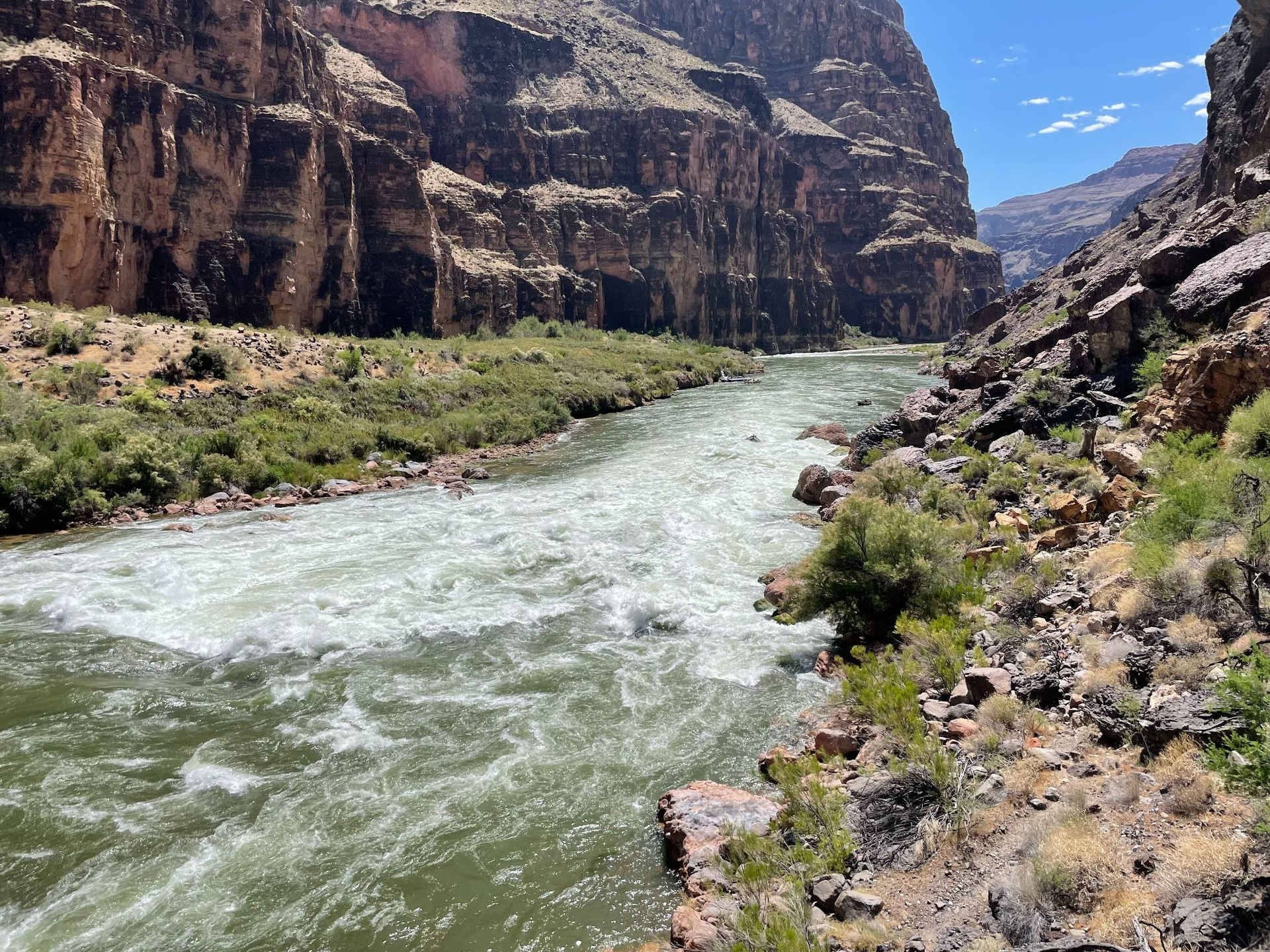
Photo Credit: Owen W.
Lava Falls has its reputation because it combines speed, force, and big wave features in a way that feels serious. It’s not just bigger waves- it’s also the way the river funnels and stacks into high-energy water, all the while surrounded by ancient lava flows.
A few features of Lava Falls:
- Ledge Hole: A massive pour-over at the top of the rapid right in the middle of the river
- Cheese Grater: A giant boulder of Lava Rock at the bottom of the rapid, with lots of current going into it.
- The Big Kahunas: Two big holes just to the left of the Cheese Grater.
Lava Falls is usually a big ride regardless of the river flows. People respect it and guides treat it as a major moment.
For most guests, Lava Falls is a mix of sound, speed and sudden motion. You can hear the roar before you come around the bend and see the rapid. Although the rapid is big, it is short and only lasts about 13 seconds. Common guest experiences include:
Major adrenaline above the rapid with the roar of the rapid in your ears- Big lateral waves pushing the boat around when you drop in.
- Two big holes at the bottom that feel like a rollercoaster.
- A rush of relief and excitement once you’re through.
Right after Lava, the mood usually flips from focused quiet to laughter, shouting and rehashing of the rapid.
Is Grand Canyon white water rafting safe?
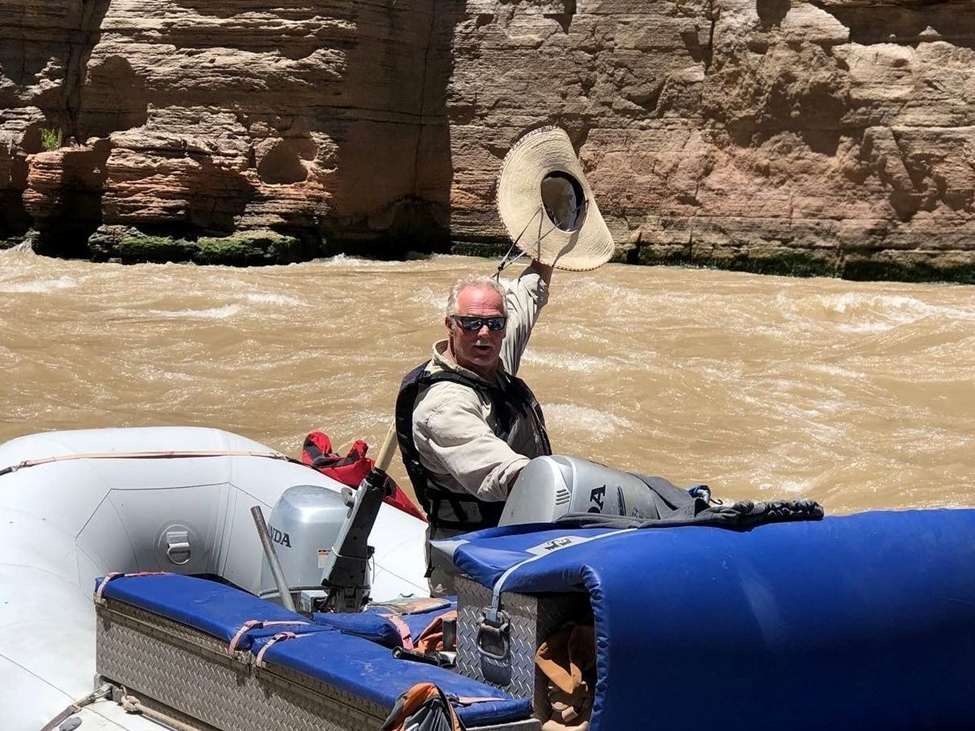
Grand Canyon white water rafting is an adventure activity and it is not without inherent risk. Commercial trips have practices that attempt to mitigate the risk. Some of these practices you may see your guides do are:
- Review the rapid and pick a line for the conditions. This may include pulling to shore and scouting the rapid before running it.
- Guides will give clear instructions on where to sit and how to hold on.
- Guides will make sure the group is ready before entering the rapid.
Important gear and systems include:
- Properly fitted and buckled personal floatation devices (PFDs).
- Safety talks that include what to do if you become an involuntary swimmer.
- Medical and rescue equipment carried by the guide team
Guest participation is also important to help mitigate risk. Guests are asked to:
- Actively listen during safety and orientation talks.
- Stay seated where and when the guide instructs you to.
- Hold on- don’t take pictures or put your hands up like you are on a roller coaster.
All these things can help make the rapids feel exciting, rather than stressful.
Motorized rafts vs Dories: how the ride changes
Not only do different boats go different speeds on flat water, different boats will also respond differently in rapids.
Motorized Trips: pacing, stability, and what the “hits” feel like
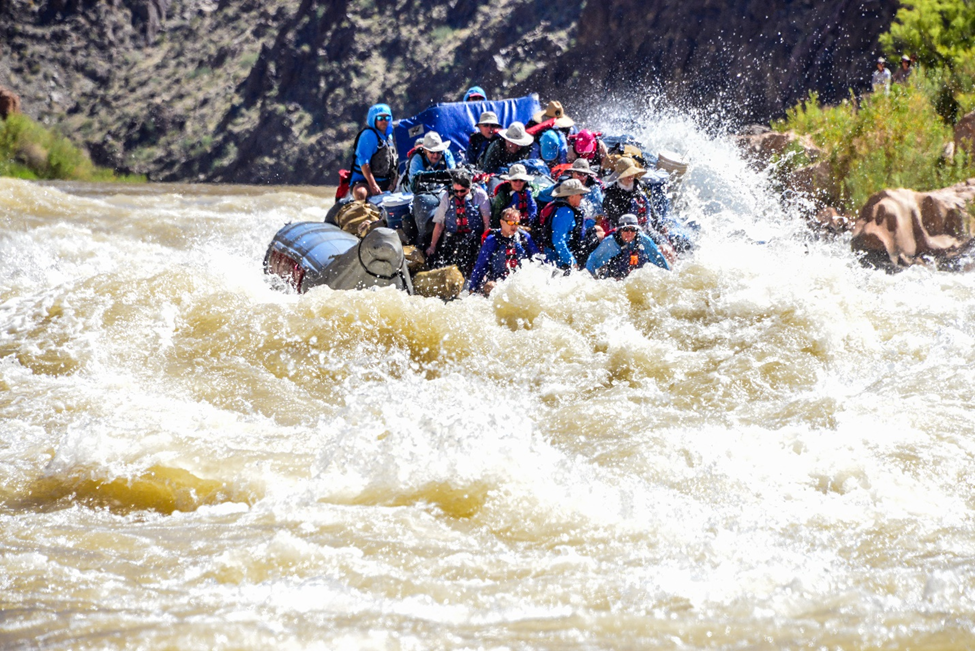
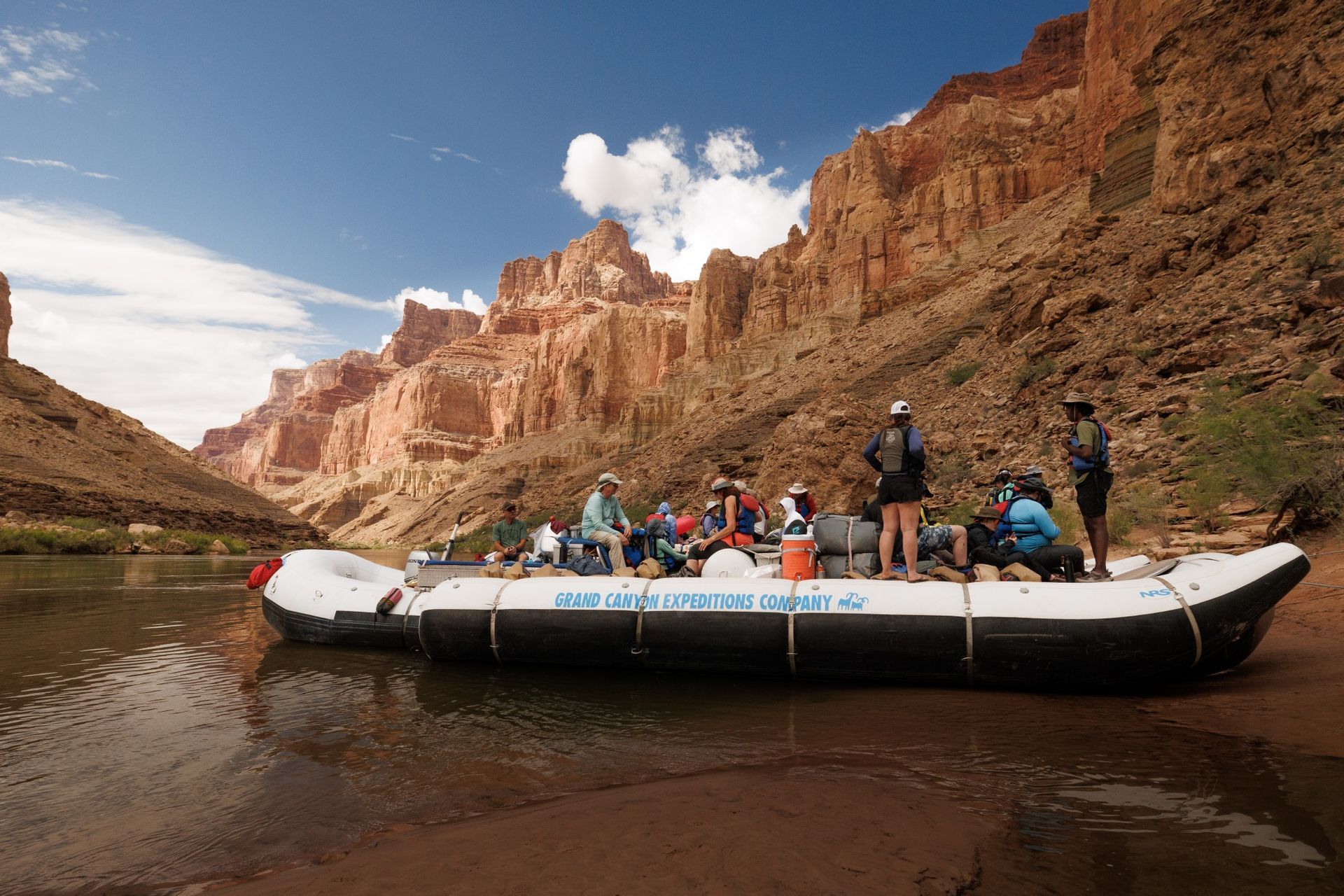
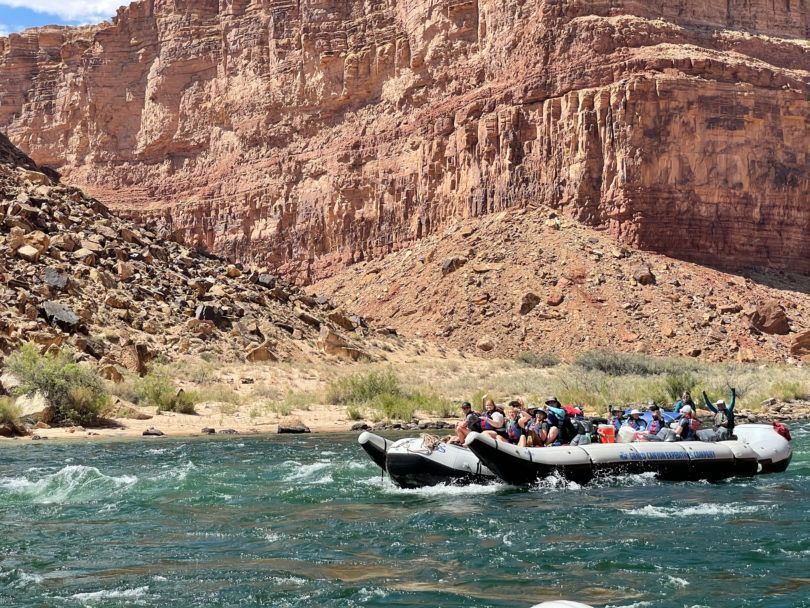
Our motorized rafts (S-rigs) are roomy and more stable than dory boats. They are built to carry people and gear comfortably while still handling rough water. Where you sit can change how the ride feels.
- The front of the boat tends to be wetter and more exciting as it hits the waves.
- The middle feels more steady and tends to be less wet.
- Your guides operate the boat from the back. Because they move around a lot and will need to lift the motor out of the water at times we do not permit guests to ride in the back of the boat.
Motorized trips cover more distance in a day, so the overall rhythm can feel faster while the rapids deliver plenty of excitement.
Our
motorized trip setup gives more details about what the trip entails.
Dory (oar-powered) trips: responsiveness and a different kind of thrill
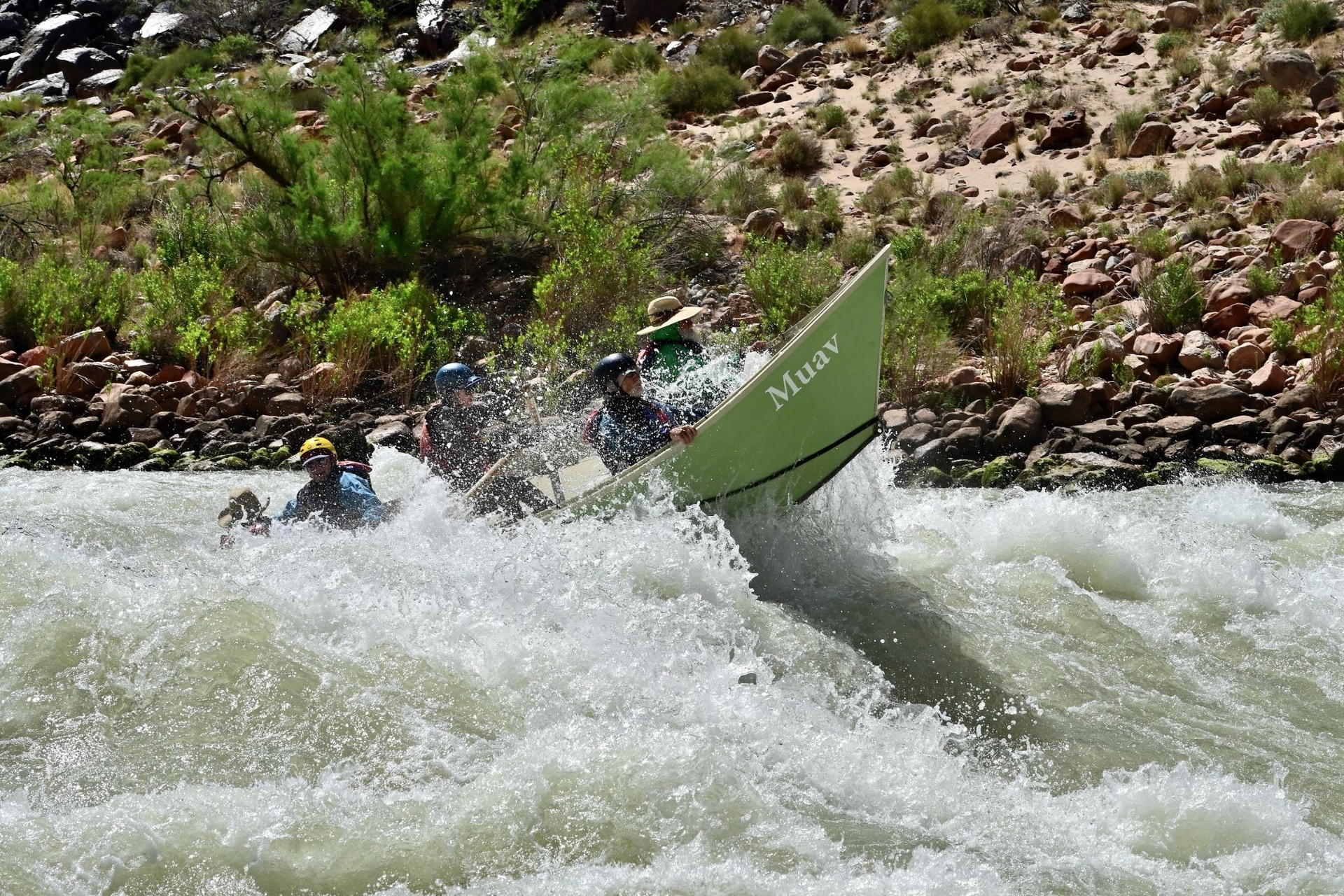
Photo Credit: Terrill Jones
Our dory boats are much shorter and ride closer to the water than our motorized S-rigs. These boats are much more reactive than a motorized raft and respond quickly with a push or pull of an oar. Many guests say they feel more connected to the river on a dory.
On a dory:
- You may notice shifts in current and speed more.
- The ride can feel sharper and more lively. Active participation is required, such as high siding and bailing water.
For a quieter, oar-powered experience, our
dory trip information gives a good idea of what the trip is like.
The best trip fit comes down to pacing, trip length, and how you want your days on the water to feel. Many of our dory guests wanted a longer and more intimate experience after taking one of our motorized expeditions.
What to expect in a rapid
Before a rapid, a guide will give reminders and instructions. You might hear things like “feet in”, “two opposing hand holds” or “check your PFD”. During the rapid you may feel quick movements:
- The boat rises and drops as it climbs and slides off waves.
- Side hits can tilt the boat left or right.
- A big splash can feel like a bucket o f water was dumped on your head.
- Your stomach may jump the way it does on a steep ride.
After the rapid, things mellow out quickly:
- Your guide may check the group
- People will readjust their hats and sunglasses
- You may laugh about the biggest splash.
- The calm stretch after the rapid may feel extra peaceful.
Once you have run a few rapids people will often gain confidence quickly. Many of our guests that have a lot of apprehension about the rapids before the trip find that it is their favorite part of their trip!
Will I enjoy the rapids?
Enjoying the rapids may depend on comfort with motion, comfort with water and handling instructions.
People who enjoy the rapids often share a few traits:
- They enjoy getting wet and don’t mind staying wet for a bit.
- They don’t panic with sudden movements.
- They enjoy rides that drop, bounce, or whip side-to-side.
- They can follow instructions even when excited.
Common worries and how to handle them:
Some common worries include motion sickness, fear of water and physical limitations. Most of these worries abate quickly once on the trip and some have practical solutions:
- Motion sickness: Motion sickness rarely happens on the boats. Even people who are very sensitive to motion sickness report that they did not have any issues on the boats. It is far more likely to occur on the bus rides before and after the trip. If you are prone to motion sickness, planning ahead helps. Sitting towards the front of the bus and taking medication for motion sickness can be very helpful.
- Fear of water: It’s OK to be nervous. A healthy respect for the river is important. Clear expectations and good safety talks can help to reduce stress.
- Heat: The Grand Canyon is located in a semi-arid desert environment. This leads to a very dry heat and temperatures that can reach well over 100 degrees Fahrenheit in the summer. Proper clothing, water and food intake, and transparent communication with your guides can help prevent heat-related illnesses.
- Physical limits: Getting on and off the boats and walking on sand can be tiring. Honest self assessment and good communication can help you decide if this trip is right for you. Our Essential Eligibility Criteria(EEC) gives detailed information about the trip requirements.
If you are unsure, pick a trip style that best matches your comfort level and show up ready to listen! Our office is available to help you figure out if one of our trips is a good fit for you.
Other FAQs about Grand Canyon whitewater:
What is Grand Canyon whitewater like compared to other rivers?
The Colorado River is a large-volume river. This large-volume allows for S-rigs. Motorized boats of this size run only on a handful of rivers throughout the world.
The scale of the canyon is part of what makes the trip memorable. You are not just running rapids but immersing yourself in a huge canyon system for multiple days.
Are there calmer stretches or will the trip have non-stop rapids?
The Colorado River through the Grand Canyon is a pool and drop river. Pool and drop rivers have large calm stretches between most rapids. The upper, middle and lower Granite Gorges have more frequent rapids. These gorges are a small portion of the 277 total river miles you will experience on the trip. Most of your trip will be composed of peaceful stretches of river with a rapid every few miles.
Each day on the trip will have a different feel based on where you are in the canyon. Some stretches are slower which allows for more opportunities for stops and hikes. Other stretches will have lots of rapids that will help feed your adrenaline!
What’s the biggest rapid in the Grand Canyon?
This is debatable and will be different from trip to trip. Water levels, guides’ lines, and personal experience will make the rapids different each time you run them. Some of the rapids previously mentioned are considered the biggest.
Conclusion
Grand Canyon Rapids are thrilling because they're powerful, unpredictable, and are in one of the most famous river corridors on Earth. Crystal, Hermit, Lava Falls and other rapids will be memorable moments on a trip that includes calm floats, side hikes and long days on the river.
If you are thinking about white water rafting in the Grand Canyon consider your comfort with motion and water, your willingness to follow guide instructions and the other criteria outlined in our EEC. The anxiety at the start of the trip can easily morph to adventure and excitement and lead to one of the best vacations of your life!
Check out our other Blogs!