
Grand Canyon Rafting Trip Cost: What’s Included + Motorized vs Dory Pricing
Sticker prices for Grand Canyon rafting can look all over the map. That’s because “Grand Canyon rafting trip cost” depends on what kind of trip you’re comparing, how far you travel on the river, how many days you’re out, and what’s included in the package.
This guide breaks down the typical price ranges, what usually comes with an all-inclusive trip, and why motorized and dory trips often land in different price brackets. By the end, you should be able to estimate a realistic total and choose a trip that fits your budget without guessing.
Quick answer: Grand Canyon rafting trip cost range
Most people want a quick number first, so let’s start with the common ranges and what they usually mean.
Typical price ranges you’ll see
- Day trips (not full canyon): often the lowest price, but they cover only a small section of river.
- Multi-day partial-canyon trips: mid-range pricing, more time on the river, still not the whole canyon.
- Full-canyon trips (the whole river corridor): usually the highest price, because you’re paying for more days, more logistics, and a much longer route.
A lot of guided, multi-day Grand Canyon rafting trips cluster in a broad band that can start in the mid-thousands and run into the several-thousand range per person, depending on length and inclusions. That’s why people search “how much does it cost to raft the Grand Canyon” and still feel confused after reading one website. They are comparing trips that are not the same product.
If you’re comparing day trips, partial-canyon, and full-canyon trips, it helps to look at the trip length options side by side.
Why full-canyon trips cost more than partial-canyon trips
A full-canyon trip isn’t just “more rafting.” It’s more of everything: more food, more guide days, more equipment time, more transport planning, and more time off work for the traveler. If you’re looking at a full-canyon trip and comparing it to a short stretch, the price difference makes sense once you compare the number of days and the total river miles.
What drives the price (the big cost factors)
Once you know the rough ranges, the next step is understanding what pushes the price up or down on real trips.
Trip length + route length (why “full 277 miles” changes the math)
Length is the loudest factor in grand canyon rafting cost. More days means:
- More guide time
- More meals and kitchen support
- More camp setup and tear-down time
- More equipment wear and maintenance
- More complicated transportation at the start and finish
Route length matters too. Some trips cover a famous stretch and take out early. Others run the entire corridor. When the river miles climb, logistics climb with them.
That list is the reason long, full-route trips usually sit at the higher end of grand canyon rafting prices.
Boat style and support (motorized vs oar-powered)
Boat style changes how the trip moves and how it’s staffed.
- Motorized trips can cover more distance in fewer days because a motor helps move the raft through long flatwater sections.
- Oar-powered trips, including dories, move at river speed and rely on rowing skill. That usually means more trip days if the goal is to cover the whole canyon.
More days often means a higher total price, even if the daily feel is slower and quieter.
Time of year, launch schedules, and demand
Prices often move with demand. Summer dates can be popular for families because school is out. Shoulder seasons can be attractive for milder temperatures, but availability can still be tight. Some outfitters price by season, and others price by date demand.
The short version: if you have flexibility, you often get better options. If you need one specific week, you may pay more or have fewer choices.
Motorized vs dory pricing: what you get for the money
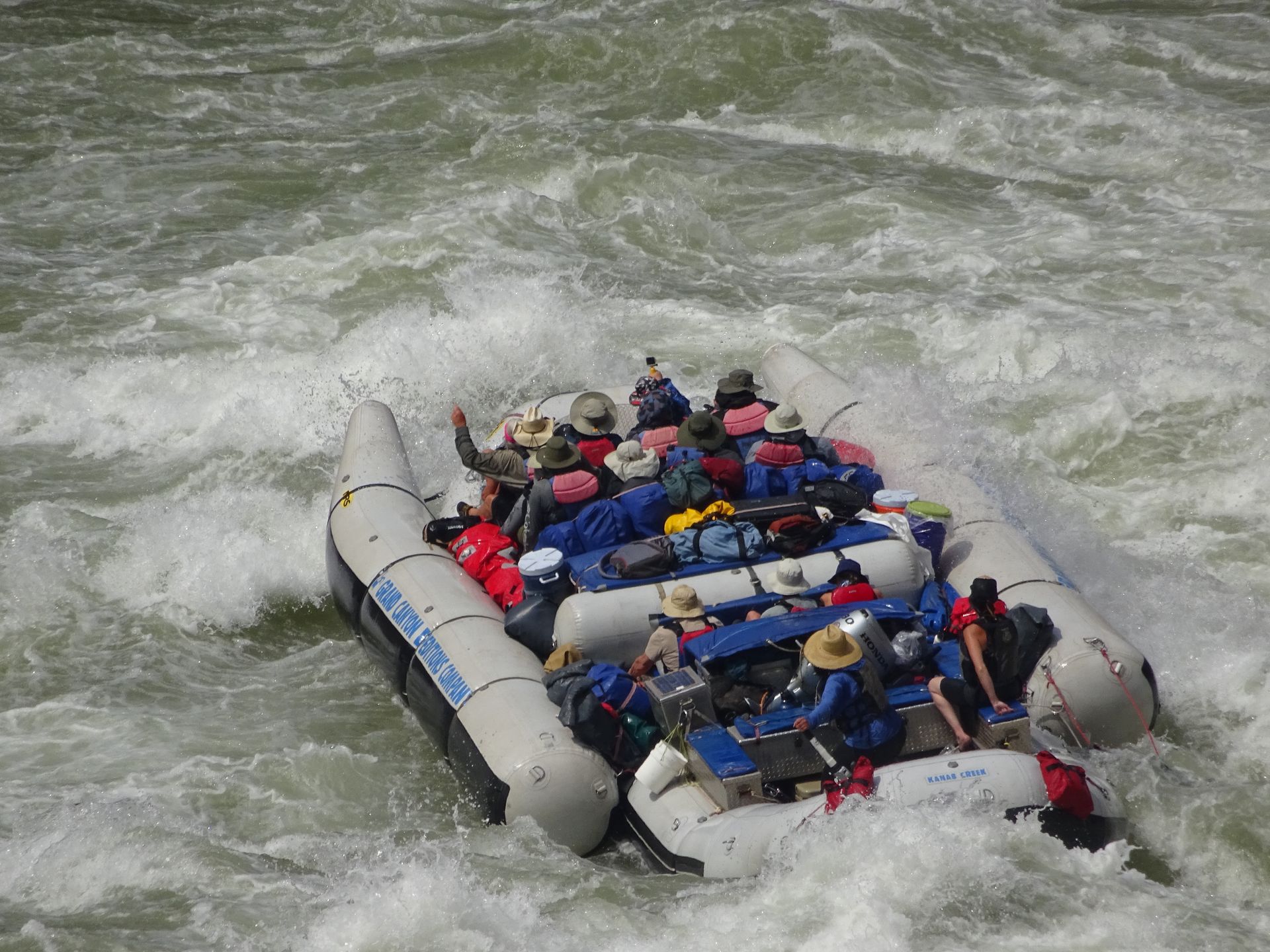
Motorized vs dory is one of the biggest decision points, so it helps to compare what’s behind the price tag.
Motorized trips: where the cost goes (and what can keep costs down)
Motorized trips are often shorter in days for a full-canyon route, which can help keep the total lower than a longer rowing-style trip. You’re typically paying for:
- A faster-paced itinerary that still includes major rapids and side hikes
- A support setup that can move camp gear efficiently
- A guide team that manages safety, meals, and camp systems while covering long river miles
Motorized trips can cover more miles in fewer days, so the motorized trip format often appeals to people trying to fit a full-canyon route into a tighter schedule.
Costs can stay more controlled because fewer trip days can mean fewer total meals, fewer nights of camp operations, and fewer days of staffing.
Dory trips: why longer, slower travel often costs more
A dory trip usually leans into a slower rhythm and more time in camp and side canyons. Many dory experiences also run longer in total days for a full-length route. That often raises the total price because you’re buying:
- More days on the water
- More meals and more camp nights
- More guide days
- More time for a smaller-boat experience that feels personal and hands-on
Rowing-style trips move at river speed and often run longer, which is why the dory trip style can land in a different price range.
Some travelers happily pay more for that style because they want the quieter pace and the feel of a traditional, responsive boat.
What “all-inclusive” usually covers
All-inclusive Grand Canyon rafting can mean different things, so it helps to spell out what’s commonly included on guided multi-day trips.
- Professional guides and safety setup, including briefings and river leadership
- Group rafting equipment, including boats and repair gear
- River safety gear, such as a personal flotation device
- Camping equipment, which can include tents and sleeping setup depending on the operator
- Meals, snacks, and water systems, often with options for common dietary needs with advance notice
- Camp kitchen systems and the behind-the-scenes gear that makes multi-day camping work
- Trip logistics, such as gear management, camp setup, cooking, and cleanup
- Transportation planning, which may include arranged transfers or shuttles
Some companies also include lodging around the trip dates or help coordinate it as part of the package. That can make the price feel higher at first glance, but it can lower your total out-of-pocket spending.
That’s the core idea: a higher sticker price can still be a better deal if it covers the pieces you’d otherwise pay for separately.
What’s often not included (common extra costs)
After you understand inclusions, the next step is planning for the costs that can still hit your wallet.
Travel, tips, and personal spending
A typical trip fare may not cover:
- Flights or long-distance driving costs to the meeting area
- Hotels outside what the outfitter includes, like extra nights before or after
- Guide gratuities, which many guests choose to budget for
- Souvenirs and personal extras, like snacks on travel days and small gear purchases
If you want a realistic grand canyon rafting trips cost estimate, add these items early so your budget doesn’t get surprised.
Personal gear you’ll still need
Even on very supportive trips, you’ll usually bring:
- Quick-dry clothing layers
- Sun protection such as a hat, sunglasses, and sunscreen
- Personal toiletries and any medications
- Footwear that can handle wet rock and sand
- A small camera setup you can protect from water
Many trips provide dry bags or waterproof storage, but you should still plan for personal items you trust and know how to use.
When you add travel, tips, and personal gear, your how much does it cost to raft the Grand Canyon total becomes much more accurate.
Full-canyon vs partial-canyon trips: cost vs experience
Now that you know what moves the price, it’s time to compare the two trip categories that people mix up most.
What “full canyon” typically means
A full-canyon trip usually means you start near the upstream gateway and travel all the way through the main corridor to the downstream takeout, covering the canyon’s full river distance. That’s the trip many people picture when they imagine a complete Grand Canyon river journey.
Full-canyon trips tend to cost more because you’re buying the complete route and the time needed to do it well.
When a shorter trip is the better buy
A partial-canyon trip can be the right call if:
- You have limited vacation days
- You want to test rafting before committing to a longer trip
- You have a tighter budget and still want a real river camping experience
- You care more about one specific section than the full route
A shorter trip can deliver huge scenery and real rapids. It just won’t give the same entire-canyon story arc, and that difference matters for some travelers.
Sample budgets (real-world totals)
Seeing sample totals makes it easier to plan, so here are two simple budget styles you can adapt.
Budget example: cost-first traveler
This traveler wants a solid guided experience while keeping spending under control.
They usually choose a trip style that matches their goals, keep travel days efficient to limit hotel nights, and bring only the personal gear they need so they avoid last-minute shopping.
Budget example: comfort-first traveler
This traveler still cares about price, but they’re willing to pay more for ease and comfort.
They often build in extra hotel nights to reduce travel stress, pack better sun protection and footwear, and keep cushion money for travel-day meals and small surprises.
No matter which style fits you, the point is the same: your real total is the trip fare plus travel and personal choices. Planning those choices ahead of time is how you control the cost.
How to pick the best trip for your budget
Prices are only helpful if they lead to a smart decision, so here’s how to match cost to what you actually want.
Best fit by goals: rapids, hiking time, quiet time
If you want more rapids and a higher-energy pace, a faster itinerary may fit better.
If you want more time in camp and side canyons, a longer trip can deliver more exploration time.
If you want a calmer daily rhythm, slower travel and smaller-boat experiences can feel more personal.
You can find joy in any of these styles. The mistake is paying for a style that doesn’t match what you enjoy.
Best fit by group: families, seniors, first-timers
Group needs can matter as much as personal preference.
Families often prefer options that balance adventure with predictable routines and manageable trip length.
Seniors may care more about comfort systems, pacing, and camp setup than about doing the biggest rapids every day.
First-timers often do better on trips where the operator handles the hard parts of camp and food, so guests can focus on the canyon.
Once you match the trip to your group, you can compare grand canyon rafting prices in a way that actually makes sense.
Ways to save money without choosing the wrong trip
If you want to lower your total, focus on the moves that don’t reduce trip quality.
- Book earlier to get better date choices and avoid last-minute stress.
- Stay flexible on departure days if your schedule allows it.
- Compare what’s included before you compare sticker price.
- Cut extra hotel nights by planning travel carefully, but leave enough buffer to avoid missed meet times.
- Buy key personal gear once, like a sun shirt, hat, and footwear, so you aren’t replacing cheap items mid-trip.
Those steps can reduce your final cost without turning the trip into a struggle. The goal is to spend less where it doesn’t hurt the experience.
FAQs about Grand Canyon rafting prices

People ask the same questions again and again, so let’s answer them clearly.
How much does it cost to raft the Grand Canyon?
The honest answer depends on trip length, route length, and what’s included. A short trip on one section can cost far less than a multi-day, full-canyon expedition. For most travelers comparing guided multi-day options, expect prices to land in the thousands per person, with full-canyon trips often higher because of the added days and logistics.
If you want the cleanest estimate, start with the trip fare, then add travel, tips, and personal gear.
Are motorized trips cheaper than dory trips?
Often, motorized full-canyon trips can be less expensive than a longer rowing-style trip because the motorized schedule can cover the same river miles in fewer days. Fewer days can mean fewer meals, fewer nights of camp operations, and fewer guide days.
Dory trips can cost more mainly because they often run longer in total days, and those extra days add real cost.
Why do prices vary so much between outfitters?
Prices can vary because packages are not identical. Some outfitters include more gear, more travel support, or more lodging help. Others price lower but leave more costs on the guest. Group size, boat style, trip length, and season also create big swings.
When you compare companies, compare inclusions first. Then compare price.
Conclusion
A Grand Canyon rafting trip is a major purchase, so it helps to break the price down into parts. The trip fare covers the core experience, but your true total comes from travel, tips, and personal choices. Once you separate full-canyon from partial-canyon trips and compare motorized vs dory styles, the price ranges start to make sense.
If you’re trying to decide where to start, focus on two questions: how many days you can take off, and which trip style fits your pace. After that, grand canyon rafting trip cost becomes a clear budget plan instead of a mystery.
Check out our other Blogs!